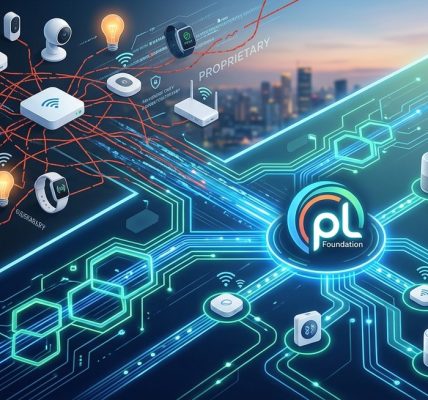

Building a connected product from scratch is a grind. You know the drill: sourcing sensors, writing drivers, managing data, securing the link, handling firmware updates. Each part feels like a mini project. That is where the right open source IoT components can save you weeks. Instead of reinventing the wheel, you stand on the shoulders of proven, community tested code. In 2026, the open source IoT landscape is mature, full of robust options that handle the heavy lifting so you can focus on your unique product logic.
Open source IoT components for developers reduce development time, improve security, and enable cross platform interoperability. This article covers ten essential tools spanning communication protocols, embedded frameworks, edge gateways, and security modules. Each section explains what the component does, why it matters to your project, and how to get started using it today.
Why Open Source Components Matter for IoT Developers
Building IoT hardware is tough enough. The software layer can make or break your timeline. Open source components give you transparency. You can audit the code, patch it, and extend it without waiting for a vendor. They also foster interoperability. When your device uses a standard open protocol like MQTT or CoAP, it talks to other systems without friction. And the community behind each project offers support and ongoing development, which means your component stays relevant as the IoT landscape changes.
If you are designing for security and compatibility, open source is often the best path. For a deeper look, check out our guide on building interoperable smart devices using open source technologies.
The 10 Essential Open Source IoT Components Every Developer Should Know
Here are the components that solve real world problems for IoT developers. I have grouped them by their primary role.
-
Eclipse Mosquitto – The most widely adopted open source MQTT broker. Lightweight, supports MQTT v5, and runs on anything from a Raspberry Pi to a server cluster. Use it for real time sensor data pipelines.
-
Zephyr RTOS – A production ready real time operating system for resource constrained devices. It supports over 500 boards and includes built in Bluetooth, Wi Fi, and Thread stacks. Ideal for battery powered sensors.
-
prplMesh – An open source implementation of the Wi Fi EasyMesh standard. It enables multi access point networks that self organize. Perfect for smart home and enterprise IoT deployments that need seamless roaming.
-
Eclipse Paho – Client libraries for MQTT in C, Python, Java, and many other languages. It abstracts the protocol details so you can focus on your application logic.
-
OpenThread – An open source implementation of the Thread networking protocol. It provides low power, mesh capable connectivity for home automation devices. Google’s Nest Hub and many other smart devices rely on it.
-
Node-RED – A flow based programming tool for wiring together hardware devices, APIs, and online services. Great for prototyping and edge gateways. You can visually map sensor inputs to cloud outputs in minutes.
-
Eclipse Californium – A CoAP (Constrained Application Protocol) implementation in Java. It is useful for devices that need RESTful interactions over UDP, with built in security via DTLS.
-
Tasmota – Open source firmware for ESP32 and ESP8266 based devices. It lets you repurpose smart plugs, lights, and sensors with a web interface. Perfect for quickly validating hardware designs.
-
ThingsBoard – An open source IoT platform for data collection, visualization, and device management. It includes dashboards, rule engines, and MQTT/CoAP support. Useful when you need a backend without building one from scratch.
-
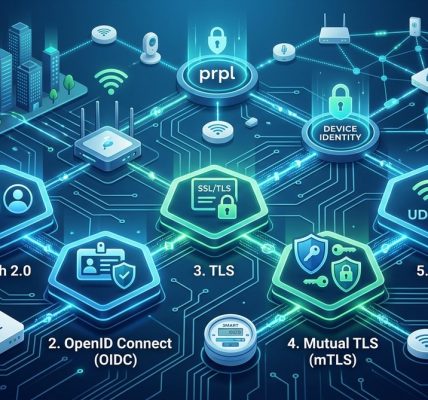
WolfSSL – A lightweight SSL/TLS library designed for embedded systems. It supports modern ciphers and is FIPS 140 2 validated. Use it to secure communication between your devices and the cloud.
Each component has a strong community and regular updates, which matters for long term maintenance. For a more comprehensive view of open source contributions to IoT, read why open source is the backbone of secure, interoperable IoT.
Practical Steps to Integrate These Components into Your Project
You cannot just dump a library into your code. Integration requires planning. Follow these numbered steps to reduce friction:
-
Map your requirements – List the core functions: connectivity (Wi Fi, Bluetooth, Thread), messaging protocol (MQTT, CoAP), device management, and security. Choose components that cover your top needs first.
-
Set up a test environment – Use a Raspberry Pi or a virtual machine to spin up Mosquitto, ThingsBoard, and Node RED. This lets you validate the data flow before touching your custom hardware.
-
Port the RTOS – If you are using Zephyr, clone their repository, select your board, and configure the device tree. Zephyr’s Kconfig system makes it easy to enable or disable features.
-
Implement security early – Add WolfSSL to your MQTT or CoAP client. Do not wait until after the first prototype. Security patches are easier when the architecture is still malleable.
-
Build a prototype gateway – Use Node RED or a python script with Eclipse Paho to bridge sensor data to your cloud platform. This gives you a working system for alpha testing.
-
Write integration tests – Automate tests for device onboarding, data publishing, and firmware over the air (FOTA). Use tools like Docker to simulate multiple nodes.
-
Monitor and iterate – Deploy in a small production environment first. Watch for memory leaks, packet loss, or connection drops. Open source components often have logging hooks that help debug issues.
For more on securing your firmware pipeline, see how open source firmware updates reduce IoT attack surfaces.
Common Mistakes When Choosing Open Source IoT Components
Developers sometimes pick a component based on hype or because it was used in a popular project. That can backfire. Here are pitfalls to avoid:
- Ignoring the licensing model. Some open source code uses copyleft licenses that may force you to open your own source. Always check the license file.
- Choosing a component with no active maintainers. A project with no commits in two years is a security risk.
- Overlooking portability. A component written for a specific microcontroller may not work on your ARM or RISC V chip. Verify it compiles for your target.
- Skipping documentation. Well documented projects have better on ramp times. If the README is sparse, expect a steep learning curve.
- Assuming security is built in. Open source does not mean secure. You must still configure TLS, manage certificates, and patch regularly.
A Developer’s Checklist for Evaluating Open Source IoT Tools
Use this table to weigh options before committing to a component.
| Criterion | What to look for | Red flags |
|---|---|---|
| Community health | Active GitHub repo with recent commits, closed issues | Last commit >12 months ago, stale issues |
| License | Permissive (MIT, Apache 2.0) or LGPL | GPL that could infect your proprietary code |
| Hardware support | Board list includes your MCU/SoC | Only supports one niche platform |
| Documentation | API reference, examples, migration guides | Only a single blog post or no change log |
| Security track record | Documented CVEs, official security advisories | No security page, no contact for disclosures |
| Interoperability | Works with standard protocols (MQTT, CoAP, HTTP) | Custom wire format with no adapters |
Expert advice: “I always check the issue tracker before adopting any open source IoT component. If maintainers respond to questions quickly and offer guidance, it is a good sign the project will stay healthy. I have saved months of debugging by picking a well supported component over a flashy but abandoned one.” – Lena Martinez, Embedded Systems Architect
The Value of Community and Ecosystem
Open source components are only as good as the people behind them. When you run into a bug, the community can be your lifeline. Many projects offer Slack channels, forums, or monthly meetings. Before integrating a component, spend an hour reading through recent discussions. That will give you a sense of the typical response time and the level of technical depth.
If you plan to build a commercial product, you may want to contribute back. Fix a bug, submit a documentation patch, or sponsor a feature. That not only improves the component for everyone but also gives you visibility into the roadmap.
The open source IoT ecosystem is vast, but you do not need every tool. Start with the ones that solve your biggest bottleneck. For example, if interoperability between devices is your main hurdle, look at how open source protocols enhance security and interoperability in IoT devices.
Building Your IoT Stack with Confidence
Open source IoT components give you a proven foundation without vendor lock in. In 2026, the choices are richer than ever. Whether you are prototyping a smart thermostat or deploying a fleet of industrial sensors, the ten components listed here will cover your connectivity, security, and management needs.
Start small. Pick one component and integrate it into a minimal viable system. Run it for a week. Note what breaks and what works. Then layer on the next component. That iterative approach keeps your learning curve manageable and your product moving forward.
You have the tools. Now go build something great.