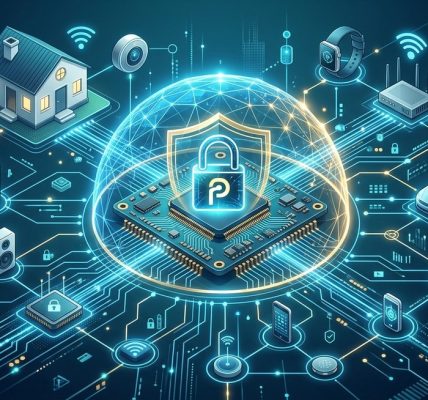

You have probably seen it firsthand. A smart thermostat that refuses to talk to your smart lights. A sensor hub that needs three different apps just to manage one room. IoT interoperability remains one of the biggest barriers to a truly connected home or industrial system. But a growing movement of developers and enterprises believe the answer lies in open source. In 2026, the conversation around IoT interoperability open source is louder than ever. Can open source really unify the fragmented world of connected devices? Let’s find out.
Open source provides transparency, community-driven standards, and modular code that can bridge protocol silos across IoT networks. While no single solution fits every scenario, projects like Matter, Zephyr, and prpl are making major strides toward seamless device communication. The practical path for engineers involves choosing open frameworks, contributing to shared standards, and adopting layered integration patterns that reduce vendor lock-in. These approaches accelerate innovation and lower integration costs, making a truly interoperable IoT ecosystem achievable for developers around the world in 2026.
Why IoT Interoperability Matters More in 2026
The IoT explosion shows no signs of slowing down. By now, billions of devices are connected worldwide. Smart homes, industrial sensors, wearables, and agricultural monitors all rely on different protocols. This diversity creates real friction. A device that uses Zigbee cannot directly talk to one that uses Wi-Fi or Thread. Proprietary ecosystems from different vendors lock users into closed loops. The cost of integrating these systems is high, and the complexity frustrates both consumers and engineers.
Interoperability is not just a convenience. It is a safety and reliability issue. Healthcare monitors must share data with hospital systems. Factory robots need to coordinate with inventory trackers. Without seamless communication, critical processes break down. Open source offers a way out by providing common building blocks that anyone can use and improve.
How Open Source Tackles the Core Problem
Open source brings three key advantages to IoT interoperability.
First, it provides transparency. Anyone can examine the code, understand how protocols are implemented, and verify that they work correctly. This trust is hard to achieve with closed source software.
Second, open source encourages community formed standards. Instead of one company deciding which protocol wins, developers from many organizations collaborate. Projects like the Zephyr OS, the Matter standard, and the prpl foundation are examples where open governance creates interoperability from the ground up.
Third, open source offers modularity. You can pick the parts you need and combine them. For example, you can use an open source MQTT broker, an open source TLS library, and an open source hardware abstraction layer (HAL) all together. This flexibility reduces the pressure to choose a single vendor stack.
Building Interoperable Smart Devices Using Open Source Technologies is exactly the kind of practical approach that many teams are adopting today.
Practical Steps to Achieve Interoperability with Open Source
If you are a developer or researcher looking to improve interoperability in your IoT system, here is a concrete process to follow.
-
Select an open source embedded OS that prioritizes compatibility. Zephyr, RIOT, and NuttX all support multiple architectures and networking stacks. They provide HALs that abstract hardware differences. This choice gives you a solid foundation for device communication.
-
Adopt standard application layer protocols. MQTT, CoAP, and HTTP/2 are widely supported and have mature open source libraries. Avoid custom or proprietary protocols unless absolutely necessary. Stick to the ones that other devices and services already understand.
-
Use an open source interoperability framework. The Matter standard (formerly Project CHIP) is a strong candidate for smart home devices. OpenThread handles low power mesh networking. The prpl security and interoperability platform provides a modular approach for service provider gateways. Pick one that matches your domain.
-
Implement a layered integration pattern. Separate device communication logic from business logic. Use adapters or gateway software that translates between protocols. Open source integration tools like Node RED allow you to build these bridges without writing massive amounts of code.
-
Participate in the community. Join mailing lists, contribute code, and test early releases. When you fix a bug or add a feature, you benefit the entire ecosystem. This participation also ensures that your use cases are represented in future standards.
These steps are not theoretical. Teams at companies large and small have used them to reduce integration time by months.
Benefits of Open Source for IoT Interoperability
- Transparency builds security and trust. Vulnerabilities are found and fixed faster when the code is open to inspection.
- Lower costs from reusable libraries. Instead of writing everything from scratch, you can build on proven components.
- Avoidance of vendor lock in. You can change underlying hardware or cloud providers without rewriting all your software.
- Faster adoption of new standards. When a new protocol emerges (like Matter 1.3), open source implementations are often the first to integrate it.
- Community driven updates and bug fixes. A single maintainer is not a bottleneck. Many eyes make the code robust.
Common Pitfalls and How to Avoid Them
Even with open source, interoperability can fail if you make certain mistakes. The table below outlines common pitfalls, the underlying mistake, and the open source solution.
| Common Pitfall | Typical Mistake | Open Source Solution |
|---|---|---|
| Protocol fragmentation | Using a niche protocol that few others support | Stick to widely adopted open standards like MQTT, CoAP, or HTTP/2 |
| Security oversights | Assuming open source is automatically secure | Always integrate proven libraries like OpenSSL, mbed TLS, or WolfSSL |
| Version conflicts | Mixing incompatible library versions | Use package managers (e.g., Zephyr’s west, vcpkg) and containerization (Docker) to keep dependencies consistent |
| Insufficient support | Relying only on community forums for critical systems | For production deployments, choose open source projects with a commercial support option (e.g., Zephyr from Nordic, or prpl from contributors) |
The Expert View
“Open source is not a magic bullet, but it is the only realistic path to universal IoT interoperability. Proprietary solutions will never agree on a common interface because their business models rely on locking customers in. The key is to invest in open standards that have real community backing, not just a single vendor’s agenda. When you contribute to open source, you shape the future of how devices talk to each other.” – Dr. Mariana Castillo, IoT Architect at the Open Interoperability Lab
Real World Success: How prpl Bridges the Gap
The prpl foundation is a great example of open source tackling interoperability in a specific vertical: service provider gateways and smart home hubs. By providing a modular, open framework that supports multiple protocols (Wi Fi, Zigbee, Z Wave, Thread, and Bluetooth), prpl allows device makers to build a single gateway that works with many ecosystems. The prpl security framework also ensures that inter device communication stays safe.
If you are working on gateways or edge devices, Unlocking Seamless Interoperability in IoT Systems with Open Source Solutions can guide you through the implementation details.
A Shared Code Future for IoT
The vision of a fully interoperable IoT will not happen overnight. But open source is accelerating the timeline dramatically. Every commit to a protocol implementation, every test case added to a conformance suite, and every discussion in a standards working group brings us closer to devices that just work together.
You can be part of this shift. Start by evaluating your current IoT stack. Identify where proprietary components create friction. Replace them with open alternatives. Contribute feedback to the communities that maintain those projects. Over time, your devices will become easier to integrate, more secure, and more reliable.
The question was: can open source solve the IoT interoperability challenge? The evidence says yes, but only if we all participate. The code is open. The standards are forming. The only missing piece is your involvement.