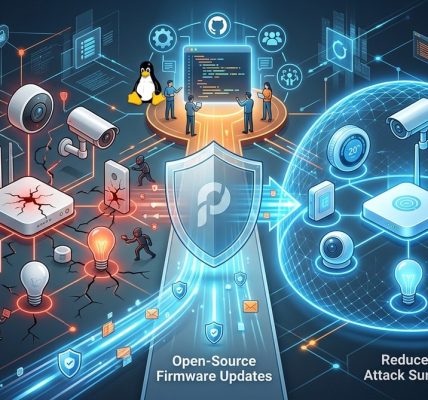

If you build connected devices for medical or industrial use, your software supply chain just became a regulatory filing. The FDA, CISA, and the European Cyber Resilience Act have all landed on the same requirement: a Software Bill of Materials, or SBOM, must accompany every IoT product you ship. And in 2026, the rules are shifting from “nice to have” to “must have.” Open-source SBOMs are becoming mandatory for IoT compliance, and the deadline is already here.
Open-source SBOMs are no longer optional for IoT compliance in 2026. Regulators like the FDA and CISA now require them for medical devices and government software. This guide covers why SBOMs matter, how to build them with open-source tools, and the exact steps to meet the new mandates before your next audit.
Why Regulators Are Targeting IoT Software Supply Chains
The old approach to IoT security focused on the hardware. You tested the radio, the enclosure, and the power supply. But the real risk today lives in the software stack. A typical IoT device pulls in dozens of open-source libraries for networking, encryption, and sensor handling. Each library has its own version, its own dependencies, and its own vulnerability history.
Regulators noticed this. In 2023, the FDA updated its cybersecurity guidance for medical devices to require an SBOM in every premarket submission. CISA followed in 2025 with updated minimum elements for SBOMs that apply to all software sold to the federal government. The European Cyber Resilience Act, which takes full effect in 2026, extends the same requirement to any IoT device sold in the EU.
What changed in 2026? CISA’s updated guidance now requires component hashes, license information for each dependency, and the generation context (build, source, or analysis). That means you cannot just paste a list of library names into a PDF. You need a machine-readable, verifiable SBOM that proves exactly what code is running on your device.
What an IoT Compliance SBOM Actually Looks Like
An SBOM is a formal, structured record of every software component in your device. Think of it like the ingredients list on a food package. It tells you what is inside, where each ingredient came from, and whether any of it has been recalled.
For IoT devices, a proper SBOM includes:
- Component names and versions
- Cryptographic hashes for each component
- License information
- Dependency relationships (which library depends on which)
- Known vulnerabilities associated with each component
- The tool used to generate the SBOM
The format matters too. Most regulators accept SPDX (Software Package Data Exchange) or CycloneDX. Both are open standards. That is good news for teams already using open-source tooling. You do not need to buy an expensive commercial license to generate a compliant SBOM. Tools like syft, cve-bin-tool, and tern are free, transparent, and widely trusted.
The Open-Source Toolchain for SBOM Generation
If you are an embedded systems engineer, you already know the drill: cross-compile, strip binaries, and push firmware. Adding SBOM generation to that workflow does not have to hurt. Here is a practical toolchain that works for most IoT projects.
1. Syft for Dependency Discovery
Syft scans your container images, filesystem, or source code and outputs a list of all dependencies. It supports both SPDX and CycloneDX. Run it in your CI pipeline after every build. It takes seconds.
2. Grype for Vulnerability Scanning
Grype takes the output from Syft and cross-references it against the National Vulnerability Database (NVD) and other sources. It flags known vulnerabilities by CVE ID and severity. Pair it with your SBOM to generate a living risk report.
3. Tern for Containerized Firmware
If your firmware runs inside a container (common for Linux-based IoT gateways), Tern builds an SBOM from the container image itself. It understands package managers like apt, yum, and pip.
4. SPDX Tools for Validation
Once you have an SBOM file, validate it against the SPDX specification. This catches formatting errors before you submit it to a regulator or customer.
A Step-by-Step Plan for IoT Compliance SBOM 2026
Here is a numbered process you can implement this week. It aligns with the latest CISA minimum elements and FDA premarket guidance.
-
Inventory all software artifacts across your repositories, containers, and build outputs. Do not skip third-party libraries or vendor-provided binaries. If it runs on the device, it goes in the SBOM.
-
Generate SBOMs automatically in your CI/CD pipeline. Use Syft or a similar tool as a build step. Do not rely on manual spreadsheets. They will be out of date before the device ships.
-
Validate coverage against the running firmware. An SBOM generated from source code might miss runtime dependencies loaded by the operating system. Run a separate scan on a test device to confirm the SBOM matches reality.
-
Route vulnerability findings to named teams. When Grype flags a CVE, someone needs to triage it. Assign a response time based on severity. Critical vulnerabilities should have a 48-hour turnaround.
-
Document exploitability with VEX. A Vulnerability Exploitability Exchange (VEX) document tells your customers whether a known vulnerability is actually exploitable in your specific device configuration. This prevents unnecessary alarm and patch fatigue.
-
Keep evidence current with production versions. Every firmware update should trigger a new SBOM generation. Archive the old SBOMs with the release notes. Auditors will ask for the history.
Common Mistakes and How to Avoid Them
Even with good intentions, teams make errors that break compliance. Here is a table of the most frequent mistakes and the fix for each.
| Mistake | Why It Hurts | The Fix |
|---|---|---|
| Generating SBOMs only once at release | Vulnerabilities found after release are invisible | Regenerate SBOMs on every build and compare against updated vulnerability feeds |
| Using proprietary SBOM formats | Regulators require SPDX or CycloneDX | Convert to open standards using syft or spdx-sbom-generator |
| Ignoring transitive dependencies | A library’s library can contain a critical CVE | Enable deep dependency scanning in your toolchain |
| Skipping license information | CISA 2026 requires license data per component | Use license_finder or a similar tool to extract license metadata |
| Not documenting generation context | Regulators want to know if the SBOM came from source, build, or analysis | Add a metadata field in your SBOM with the tool name, version, and context |
Expert Advice on Staying Ahead of the Curve
“The teams that treat SBOM generation as a one-time checkbox are the ones that get burned in audits. You need to treat it like a continuous monitoring process. Every time you update a library, every time you patch a vulnerability, your SBOM changes. Automate the whole thing. If you are doing it manually, you are already behind.” – Arun Narasimhan, Chair, M3AAWG IoT SIG
That quote captures the mindset shift required in 2026. SBOMs are not a deliverable you attach to a PDF. They are a living document that must evolve with your firmware.
How Open Source Makes Compliance Easier
You might wonder why regulators are pushing open-source SBOMs instead of commercial alternatives. The answer is trust. Open-source tools are auditable. Anyone can inspect the code that generates the SBOM. That transparency is exactly what regulators want when they ask for a software bill of materials. They do not want to trust a vendor’s black box. They want to see the receipts.
Open-source SBOMs also reduce vendor lock-in. If you use a proprietary SBOM tool today and the vendor changes its pricing or format next year, you are stuck. With open-source tools, you own the process. You can fork the tool, extend it, or switch to a different one without redoing your entire compliance pipeline.
This aligns with the broader trend in IoT security. More teams are adopting open-source embedded frameworks to build devices that are both secure and interoperable. The same philosophy applies to compliance. Use open standards, open tools, and open formats. It saves time, money, and headaches during audits.
What Happens If You Ignore the Mandate
The consequences vary by region and market. In the US, the FDA can delay or deny premarket approval for medical devices that lack an SBOM. For industrial IoT sold to the federal government, CISA’s guidance is effectively a procurement requirement. If your SBOM does not meet the minimum elements, you cannot sell to federal agencies.
In the EU, the Cyber Resilience Act allows market surveillance authorities to issue fines of up to 15 million euros or 2.5 percent of global annual turnover for non-compliance. That is not a hypothetical. The first enforcement actions are expected in late 2026.
For consumer IoT, the US Cyber Trust Mark program is voluntary today, but it sets the baseline for federal procurement. If you want to sell smart home devices to schools, hospitals, or military bases, you will need a compliant SBOM.
The Role of Open-Source Communities in Shaping Standards
The SPDX and CycloneDX specifications are maintained by open-source communities. They update the formats based on real-world feedback from embedded systems engineers, not from marketing teams. That means the standards stay practical. When the community saw that license information was hard to extract, they added optional fields and better tooling. When regulators asked for component hashes, the communities added hash support in the next spec revision.
This feedback loop is valuable for IoT product managers. If you find a gap in the standard, you can submit a proposal. You are not stuck waiting for a vendor to release a new version. Open-source compliance is a conversation, not a purchase order.
A Final Look at the 2026 Landscape
The shift toward mandatory SBOMs is part of a larger regulatory wave. The FDA, CISA, and the European Commission are all moving in the same direction. They want transparency, accountability, and a way to respond quickly when a vulnerability like Log4Shell appears. An SBOM is the only practical way to know which devices are affected and which are safe.
For teams building medical devices, industrial controllers, or smart infrastructure, the message is clear. Open-source SBOMs are no longer a best practice. They are a requirement. The good news is that the tools are free, the standards are open, and the community is ready to help.
Your Next Steps for IoT Compliance SBOM 2026
Start small. Pick one device in your portfolio. Generate its SBOM using Syft or a similar open-source tool. Validate it against the SPDX 2.3 or CycloneDX 1.5 specification. Run Grype to find vulnerabilities. Then document what you learned and apply it to the rest of your product line.
Set a calendar reminder to regenerate SBOMs every time you push a firmware update. Tie the SBOM generation into your CI/CD pipeline so it happens automatically. Train your compliance officers on how to read and interpret SBOM files. They will need to explain them during audits.
If you need a deeper reference, check out our guide on how open source can help meet IoT security regulations in 2026. It covers the specific regulatory language and how to map it to your development process.
The regulators have set the bar. The tools are in your hands. The only question is whether you start now or after the first audit letter arrives. Start now. Your customers, your auditors, and your future self will thank you.